Friday, February 23, 2007

Picking Scabs

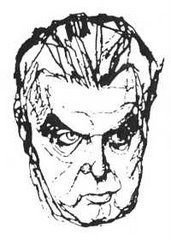
Being a centrist party has its advantages when you're in power. Jean Chretien's ability to ride waves of public opinion -- a little deficit reduction here, a little health care spending there -- was as much due to his own skill as it was to the nature of his party. As an ideologically-diverse coalition united, at times, only by their desire to hold power, theirs was a fairly easy caucus to control. Chretien's grip on his party was built on the same foundations as his grip on parliament -- what he said, went. You don't recall him ever issuing a three-line whip, do you?

Oh, how a few months can change things. Only now, after moving across the aisle, do we out now just how divided the Liberal Party is. The party is split over Anti-Terror legislation, and will soon divide over Afghanistan and the CN Rail dispute. A "united" Liberal Party passed the ATA less than two years ago. Are we to believe that half of them have suddenly had a change of heart -- that they've just recently become Charterphiles? No. The divisions were there under Martin and Chretien; they were simply papered over by power.

No amount of whipping will help Dion out of this situation. And he knows it. You need some source of authority if you are going to keep your caucus from falling apart, let alone drive it to reverse its own position. Withholding nomination papers is the last-ditch act of a desparate leader -- a threat that has little hope of working anyway, considering many Liberals are seriously re-considering their re-election bids.

It's plain to see: Without Chretien-like control of cabinet postions, election timing or the budget -- and without popular support both inside and outside the party -- Stephane Dion has lost control of his fragile coalition.

Actually... let's be truthful: He never had control of his party. Anyone who watched the Grits' convention in Montreal could see the divisions in the party. New versus old. Old versus young. Corrupt versus fresh. Left versus right. West versus East. French versus English. It didn't take placard signs or fake smiles to see the cleavages within the Liberal ranks.

Not that these emerged, magically, during the convention. Chretien's long goodbye left over a year for these wounds to fester. Martin's 'victory' only added salt. The convention-night: a massive exercise in scab-picking.

Not that the Liberal Party is unique in this regard. Masochism has become synonomous with Conservative Parties when they're out of power, particularly when polls show little hope for a return to office. It's just a little satisfying to learn that the "Tory Syndrome" isn't uniquely Tory after all.

Tuesday, February 20, 2007

Red Pumps and the BC Budget

Just when you thought that society was moving past traditional gender roles.... Open up the pages of the Vancouver Province.

In a disgusting and ridiculous story about the upcoming BC provincial budget, a writer suggested that Liberal Finance Minister Carole Taylor had learned her lesson from her last budget speech. No, the lesson had nothing to do with the balance between debt repayment, tax relief and social spending. (Heaven forbid we should spill policy ink on the pages of the Province.) No, the lesson had nothing to do with her delivery of the speech, either. It had everything to do with... wait for it.... HER CHOICE OF FOOTWEAR. (?!?)

In the opening lines of the article, Michael Smyth -- a knuckle-dragging man who could only be described as such in the most generous terms -- wrote,

"Trying to guess what's in the budget is always a dangerous game, but there's one budget-day prediction that's been a rock-solid, take-it-the-bank lock for a year now: There was no way Carole Taylor was going to wear those $600 Gucci pumps again. Taylor's choice of footwear last year was one of her few gaffes in an otherwise polished performance as B.C. finance minister. Selecting gold-buckle pumps from the Ivana Trump collection for her traditional budget-day shoes wasn't exactly a stroke of populist genius. No surprise, then, that she's adopted the oh-so-fashionable environmental theme this year to avoid another political bad-shoe day. She'll table the 2007 budget this afternoon while standing in the same pair of 16-year-old 'recycled' high-heels she wore back in 2005."

When's the last time you heard anyone comment about the cost and style of Federal Finance Minister Jim Flaherty's thousand-dollar suit? (They're actually quite nicely tailored, by the way. Check it out.) I wonder why no one suggests he should 'dress down' when making a budget speech on cuts to welfare programs.

You study this type of gender-framing in the media -- mostly in the abstract. You tend to shrug off studies that suggest women are treated differently by journalists and editors. (It's easy to write them off as 'feminist' -- a term which, somehow, has been tainted as meaning 'less than scientific'.) Guess what: those studies are right. Check out Linda Trimble's award winning paper on "Who Framed Belinda Stronach".

When you teach about gender-framing, you hear students remark -- "Yeah, but that only happened in the old days of news reporting. We've come a long way since then." Guess what: we haven't.

Congratulations Mike Smyth and the Vancouver Province: you've just assured yourself of a permanent place in the required reading lists of every gender-politics course in the country. And you've earned the shame of every man who deserves to call himself one. Even someone from the Calgary School has to appreciate that.

Monday, February 19, 2007

State of the NB PC Party

I know that the New Brunswick PC's have been synonymous with Bernard Lord, but this is ridiculous. Lord stepped down in late-December, and they still haven't relaunched their website. Get it together.

Saturday, February 17, 2007

1988 Again?

I'm the last person to draw comparisons between elections, but the upcoming (ongoing?) election campaign feels a lot like 1988, doesn't it?

For one, all major parties are in agreement on shelving some of the most 'dangerous' issues (in 1988: Meech Lake; in 2006: health care). Plus the Tories have managed to find an issue over which they can divide the left (in 1988: Free Trade; in 2006: the environment).

I'm not saying that Harper can achieve a "Mulroney Majority" (built on the strength of a meagre share of the popular vote). But the potential is there. This is especially true if the environment remains the focus of the campaign. Think about it: the Tories are looking to make gains in BC, Ontario and Quebec. In all of those regions, the left is split between two of three parties (the Grits, Greens and Dippers). Dion knows this, which is why he's swinging deals with Elizabeth May. Layton, if he's smart, would do the same. In this election, perhaps more than ever before, a vote for a third party (Bloc, NDP, Greens) really is a vote for the Conservatives.

What's more, just like Free Trade in 1988, there's no need for the Tories to moderate their policy on the environment. They can own the business-friendly, fiscally-responsible vote (larger than you'd think, by the way), with little fear that a single left-wing alternative will defeat them in many ridings. It's a complete reversal from the 1990s, when the Liberals were able to champion healthcare at the expense of a divided right.

Remember: Leading up to the 1988 election, nobody expected Mulroney to win as big a majority as he did. Harper's had the same opportunity handed to him on a silver platter: an issue over which a divided left can't possibly defeat him.

Friday, February 16, 2007

Back-Seat Governing?

Here's a scary thought.... What if the Liberals decide to implement their entire 2006 platform through a series of private member's bills? If C-288 (the Kyoto Implementation Bill) worked, what's to stop them from moving forward with the rest of their programme? John Ivison's column suggests that Paul Martin is preparing to move a 'Kelowna Implementation Bill', requiring the government to come up with a plan to implement a Liberal pact with Aboriginal groups. (The bill was to be debated last night, but the government managed to delay it's introduction.) What next? A Liberal childcare plan? As long as the Bloc and NDP are on-side, and as long as the bill "asks the House to approve certain objectives" (i.e., make a plan) as opposed to "asking the House to approve the measures to achieve certain objectives" (i.e., spend money), the Speaker is prepared to allow its passage. It's a fuzzy distinction, though. Back-seat governing is an interesting tactic, but questionably constitutional. At some point, the government will have to come up with a counter-strategy.

Respecting Parliament

Thank you, Mr. Harper. The government will respect the will of Parliament with regard to the most recent Kyoto Bill. No matter how ridiculous its judgment in this case, we ought to abide by legislation enacted in the House. It's simply tory principle. But it's also an opportunity.

As I said on Hobbs's blog yesterday, the opposition's handed the Conservatives a gift with this bill. I don't think Harper should come out against the legislation, but embrace it for what it is: the opportunity to table a report on precisely how damaging Kyoto will be. Tell the public that shutting down the Oil Sands completely, plus every coal generator in Ontario, will only get us halfway to meeting the Kyoto targets. Make sure the report also includes shutting down churches, schools and abortion clinics in Quebec (people have to drive to them -- creates too many emissions). Send the report as a bill, itself, through two readings. Have the Liberals make their own suggestions for how to destroy the economy. Accept every single Liberal amendment. Then table the report for the third reading in the House. Make it a confidence motion. Debate it on national television. Have the entire Conservative caucus vote against the bill. The Bloc will join you. The government falls. You then run the election on Dion's plan. Brilliant.

Comparing Eco-Plans

In the interests of full-disclosure, let's have a look at what each of the major parties is planning to do to save our planet:

From the Globe and Mail (07/02/16):

The Conservative plan

Total Cost: Will be revealed in next month's budget.

Environment Minister John Baird has said meeting Kyoto's 2012 targets at this point would cause "economic collapse" because the Liberals allowed emissions to rise too high.

Mandatory regulations will soon be announced requiring reductions in greenhouse-gas emissions from all industry, including the automotive sector.

The budget is expected to include a host of environmental initiatives. The Prime Minister has already announced a $1.5-billion EcoTrust to finance large projects in the provinces that reduce greenhouse gases.

An EcoEnergy Renewable Initiative, worth $1.5-billion over 10 years, was announced to encourage more renewable power production.

Budget 2006 contained tax credits amounting to two months of free bus passes for citizens who buy passes each month.

The Liberal plan

Stéphane Dion said yesterday he stands by his 2005 Project Green plan for honouring Canada's Kyoto commitments, but will be updating it shortly.

Total Cost: $10-billion

Key elements include the following:

Large Final Emitter System: Regulations would set maximum emission levels for each industrial facility in the country. Companies that are under the target could sell emission credits to companies that are over the target, creating a financial incentive to reduce emissions.

Partnership Fund: Between $2-billion and $3-billion to finance projects jointly with the provinces to reduce greenhouse gases.

Climate Fund: Between $4-billion and $5-billion for technology that reduces greenhouse gases and to buy foreign and domestic emission credits.

Automobile Industry: A voluntary agreement with the auto industry to reduce greenhouse-gas emissions by 5.3 megatonnes.

Renewable Energy: $1.8-billion over 15 years to encourage more wind and renewable power.

The New Democratic plan

Total Cost: $15.1-billion (net cost of $6.7-billion over seven years after cancelling the capital cost allowance for the oil sands)

The plan is divided into five parts:

A greener homes strategy, including energy retrofit projects: $1.3-billion over seven years.

A greener communities strategy, including reductions in landfill emissions and funds for municipal projects: $5.4-billion over seven years.

A greener transportation strategy, including GST rebates on the purchase of low-emission cars: $2.8-billion over seven years.

A greener industry strategy, including caps on industrial emissions and an end to oil-sands subsidies: saving $8.4-billion over seven years.

A greener Canada and the world, including incentives for renewable power and earning Kyoto credits through investments in the developing world that reduce greenhouse-gas emissions: $5.6-billion over five years.